

Why Does My Anxiety Get Worse at Night?
You make it through the day feeling relatively okay. Maybe you’re busy with work, classes, errands, family responsibilities, or simply moving from one task to the next. Then nighttime arrives. The house is quiet, the distractions are gone, and suddenly your mind seems to have a lot to say.
If you’ve ever wondered, “Why does my anxiety get worse at night?” you’re not alone. Many people report feeling more anxious in the evening, even when there is no obvious trigger. Others experience anxiety only at night and struggle to understand why it appears after dark.
While nighttime anxiety can feel overwhelming, it is often the result of a combination of psychological, biological, and lifestyle factors. Understanding these factors can help you respond to anxiety more effectively and create habits that support both your mental health and your sleep.
Understanding Nocturnal Anxiety: Causes and Triggers
Many people notice that their anxiety feels more manageable during the day but becomes much harder to ignore at night. This experience can be confusing, especially when there doesn’t seem to be an obvious reason for the shift. However, there are several factors that can make anxiety feel more intense once the day comes to an end.
One of the most common explanations is that nighttime offers fewer distractions. Throughout the day, our attention is pulled in multiple directions by work, school, family responsibilities, conversations, and daily tasks. While these activities don’t eliminate anxiety, they often leave less mental space for worries to take center stage. When the day slows down and external demands fade away, concerns that were pushed into the background may become more noticeable.
Fatigue can also play a role. After a long day, it is often more difficult to cope with stress, challenge anxious thoughts, or use the coping strategies that feel accessible earlier in the day. As a result, worries that might have felt manageable in the afternoon can feel much larger at night.
For some individuals, the quiet of the evening increases awareness of physical sensations such as a racing heart, muscle tension, or changes in breathing. These sensations can be interpreted as signs that something is wrong, creating a cycle in which anxiety fuels physical symptoms and physical symptoms fuel anxiety. This is one reason many people experience what feels like random anxiety at night or anxiety for no reason at night, even though underlying stressors may have been present all along.
The Connection Between Nighttime Anxiety and Sleep
Anxiety and sleep have a complicated relationship. Anxiety can interfere with sleep, and poor sleep can make anxiety worse, creating a cycle that becomes difficult to break.
When we feel anxious, the body activates its stress response system. Heart rate may increase, muscles may tense, and the mind may become more alert and focused on potential threats. While this response is helpful in situations that require immediate action, it is not particularly useful when you’re trying to fall asleep.
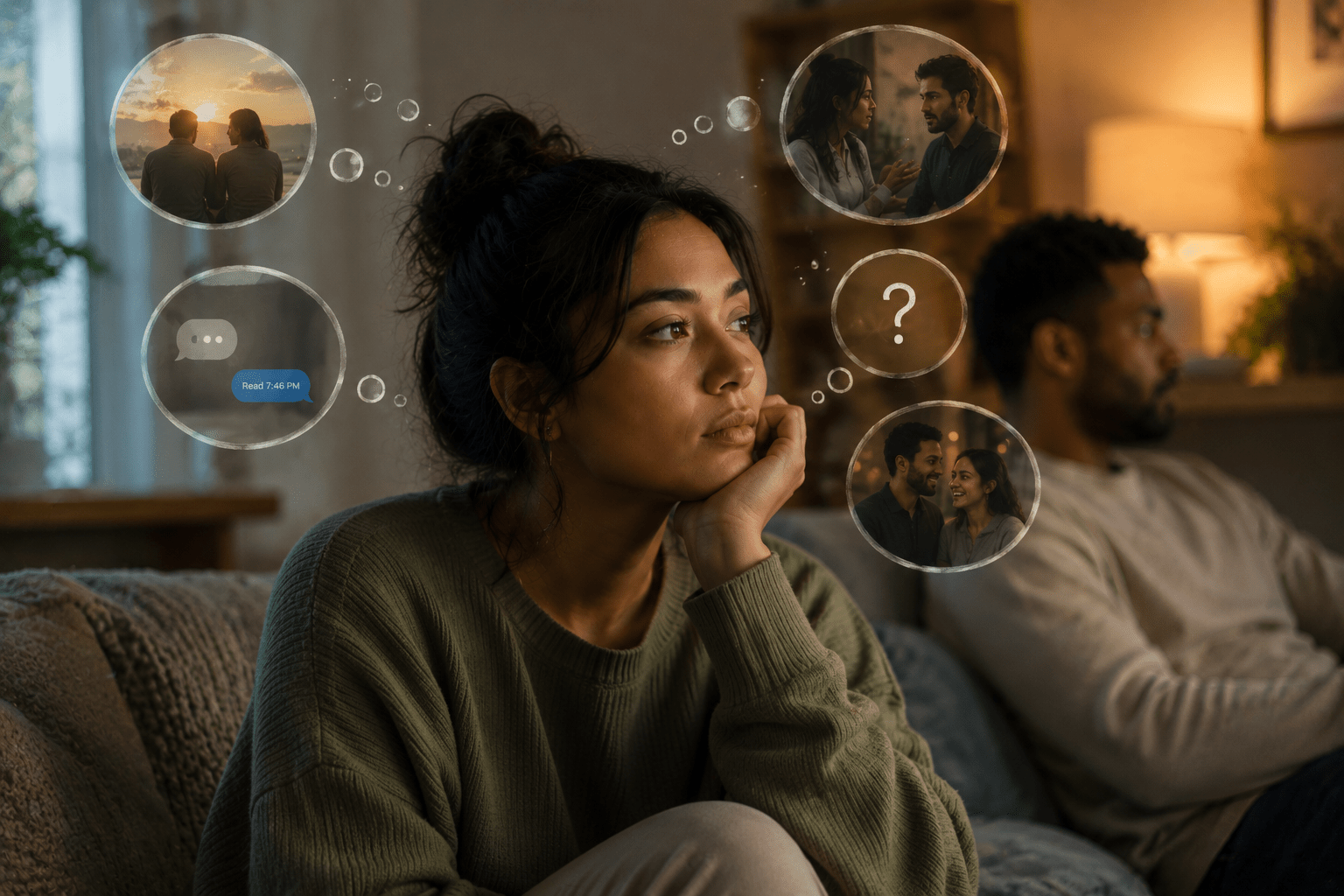
Many people who experience anxiety at night describe lying in bed replaying conversations, worrying about future responsibilities, or imagining worst-case scenarios. The harder they try to force themselves to sleep, the more frustrated and anxious they become. Over time, bedtime itself can begin to feel stressful.
Sleep deprivation can further intensify anxiety symptoms. Research consistently shows that insufficient sleep can increase emotional reactivity, reduce stress tolerance, and make it more difficult to regulate anxious thoughts. In other words, a poor night’s sleep may leave you feeling more vulnerable to anxiety the following day, which can then contribute to more anxiety the next night.
If your anxiety is keeping you awake, improving sleep habits and addressing the anxiety itself are often both important parts of the solution.
Strategies to Cope with Anxiety Escalation at Night
While there is no single technique that works for everyone, there are several evidence-based strategies that can help reduce high anxiety at night.
One helpful approach is to set aside dedicated time earlier in the day to process worries. Some people find it useful to journal, make a list of concerns, or write down potential solutions. Giving your brain an opportunity to address worries before bedtime can make them less likely to demand attention once your head hits the pillow.
Mindfulness techniques can also be effective. Rather than trying to eliminate anxious thoughts, mindfulness encourages you to notice them without immediately engaging with them. Paying attention to your breathing, observing physical sensations, or gently bringing your focus back to the present moment can help reduce the intensity of anxious thinking.
It may also be beneficial to limit activities that increase mental stimulation in the evening. Doomscrolling through social media, checking work emails late at night, or consuming upsetting news can all contribute to anxiety worse in the evening.
If anxiety becomes overwhelming, grounding exercises can help reconnect you to the present moment. Simple techniques such as noticing what you can see, hear, feel, smell, and taste can shift attention away from spiraling thoughts and back toward your immediate surroundings.
These strategies may not eliminate anxiety entirely, but they can help keep anxiety at bay and prevent it from taking over your evenings.
Creating a Relaxing Evening Routine for Better Sleep
The way you spend the hour or two before bed can have a significant impact on both anxiety levels and sleep quality.
Many people unintentionally move directly from stimulating activities into bed. They may be working, scrolling through their phones, responding to messages, or watching intense television shows until the moment they attempt to sleep. Unfortunately, the brain often needs time to transition from a state of activity to a state of rest.
Creating a consistent evening routine can help signal to your mind and body that it is time to slow down. This routine might include dimming lights, taking a warm shower, reading a book, stretching, practicing meditation, or listening to calming music.
Your sleep environment matters as well. A bedroom that is cool, quiet, dark, and comfortable generally promotes better sleep than one filled with distractions and stimulation. It can also be helpful to reserve your bed primarily for sleep rather than for work, studying, or prolonged screen time.
Consistency is important. Even small habits practiced regularly can help train your nervous system to associate bedtime with relaxation rather than worry. Over time, these changes may reduce anxiety every night and improve overall sleep quality.
Seeking Professional Help: When to Consult a Therapist
Occasional nighttime anxiety is common. However, if anxiety is interfering with your sleep, daily functioning, relationships, or overall quality of life, it may be worth seeking professional support.
Many people delay reaching out because they believe they should be able to manage anxiety on their own. Others assume that because their anxiety is primarily occurring at night, it is not serious enough to warrant treatment. In reality, persistent anxiety deserves attention regardless of when it occurs.
A therapist can help identify the specific factors contributing to your anxiety and work with you to develop strategies that fit your individual needs. Treatment may involve exploring underlying stressors, identifying unhelpful thought patterns, improving coping skills, addressing unresolved emotional concerns, or learning new ways to respond to anxiety when it arises.
Evidence-based approaches such as Cognitive Behavioral Therapy (CBT), Acceptance and Commitment Therapy (ACT), and mindfulness-based interventions have been shown to be highly effective for anxiety disorders. Many individuals find that therapy not only reduces nighttime anxiety but also improves their overall emotional well-being.
If you regularly feel anxious at night or find yourself wondering why your anxiety increases at night, professional support can provide clarity, guidance, and relief.
Building a Brighter Tomorrow: Overcoming Nocturnal Anxiety
Nighttime anxiety can feel isolating, especially when the rest of the world seems asleep while your mind remains wide awake. However, experiencing anxiety after dark is more common than many people realize.
Often, nighttime anxiety develops because the distractions of the day have faded, fatigue has made it more difficult to manage stress, and unresolved worries finally have space to surface. When anxiety begins interfering with sleep, it can create a cycle that reinforces itself night after night.
The good news is that nighttime anxiety is treatable. Small changes to your evening routine, improved sleep habits, mindfulness practices, and healthy coping strategies can all make a meaningful difference. For individuals whose anxiety feels persistent or overwhelming, therapy can provide additional support and tools for long-term change.
If you’ve been asking yourself, “Why is my anxiety so bad at night?” remember that the goal is not to eliminate every anxious thought. Rather, it is to develop a healthier relationship with anxiety so that it no longer controls your evenings or disrupts your rest.
With the right support and strategies, peaceful nights and restorative sleep are possible.
At Madison Park Psychological Services, we help individuals and couples better understand anxiety, attachment patterns, self-doubt, communication challenges, and relationship dynamics so they can build healthier, more fulfilling relationships.
We offer:
- Individual therapy
- Couples counseling
- Anxiety treatment
- Trauma-informed therapy
- Online therapy
- Psychological consultation services
Our goal is not to tell you to simply “stop worrying” or “think more positively.” Our goal is to help you understand the patterns driving your anxiety, strengthen your emotional resilience, and create healthier ways of relating to yourself and the people you care about.
With the right support, greater confidence, emotional security, and peace of mind are possible.
You do not have to navigate this alone. With the right support, greater confidence, emotional security, and peace of mind are possible.
Author:

MPPS Team (Reviewed By Dr. Yasmine Saad)
Hello! I’m Dr. Yasmine Saad, an award-winning psychologist based in New York City and a two-time international best-selling author. You might know me as “The Wise Psychologist,” a title given to me by my clients for my work. I’m honored to have been recognized by Forbes alongside inspirational figures like Tony Robbins.
My work is centered around my Inner Message Approach®, a transformative method I developed to help individuals decode their thoughts and emotions. This approach is designed to empower people to overcome negative patterns and unlock their true potential. USA Today has called me a “visionary,” highlighting how I’m redefining our understanding of the human mind by combining deep wisdom with revolutionary techniques.
As the founder of Madison Park Psychological Services, I lead a team of exceptional psychologists, representing the top 5% in our field. We specialize in providing holistic care to our diverse clientele, integrating ancient Eastern wisdom with modern Western therapeutic techniques. Through my Inner Message Approach®, my team and I have successfully guided countless adults, couples, and children toward wellness in a remarkably short time.
In addition to my clinical practice, I’m an internationally acclaimed speaker, often sharing the stage with icons like Deepak Chopra, Dr. Shefali, Les Brown, and many others. I’m passionate about educating the public on the Inner Message Approach®, and my insights have been featured in over 100 media outlets, including ABC, CBS, NBC, BBC, and Fox.
This exposure has solidified my reputation as a leading authority in psychology and personal development. I’m proud to have my expertise recognized both nationally and internationally, not only as a seasoned practitioner but also as an educator in this fascinating and ever-evolving field.
MPPS Team (Reviewed By Dr. Yasmine Saad)
Hello! I’m Dr. Yasmine Saad, an award-winning psychologist based in New York City and a two-time international best-selling author. You might know me as “The Wise Psychologist,” a title given to me by my clients for my work. I’m honored to have been recognized by Forbes alongside inspirational figures like Tony Robbins.
My work is centered around my Inner Message Approach®, a transformative method I developed to help individuals decode their thoughts and emotions. This approach is designed to empower people to overcome negative patterns and unlock their true potential. USA Today has called me a “visionary,” highlighting how I’m redefining our understanding of the human mind by combining deep wisdom with revolutionary techniques.
As the founder of Madison Park Psychological Services, I lead a team of exceptional psychologists, representing the top 5% in our field. We specialize in providing holistic care to our diverse clientele, integrating ancient Eastern wisdom with modern Western therapeutic techniques. Through my Inner Message Approach®, my team and I have successfully guided countless adults, couples, and children toward wellness in a remarkably short time.
In addition to my clinical practice, I’m an internationally acclaimed speaker, often sharing the stage with icons like Deepak Chopra, Dr. Shefali, Les Brown, and many others. I’m passionate about educating the public on the Inner Message Approach®, and my insights have been featured in over 100 media outlets, including ABC, CBS, NBC, BBC, and Fox.
This exposure has solidified my reputation as a leading authority in psychology and personal development. I’m proud to have my expertise recognized both nationally and internationally, not only as a seasoned practitioner but also as an educator in this fascinating and ever-evolving field.