

Home » Advanced Psychotherapy and Counseling Center

Food plays a central role in our lives—not just for sustaining life but also for engaging in culture, connection, and celebration.
Although we know food is essential to our functioning, we all connect with it differently.
Some of us enjoy eating when hungry and until full, without paying too much attention to the matter. Some may have persistent disturbances in their eating behaviors, fitting the criteria of eating disorders and hindering multiple areas of their lives. Yet, for others, things are not as black and white.
Disordered eating encompasses a broad spectrum of problematic eating habits. Some of these habits are minor and cause little dysfunction, while others are out of control, problematic, and even deadly. A person may engage in disordered eating without having an eating disorder, but that does not mean that the behavior is any less concerning.
While it’s challenging to discern whether someone is undergoing an eating disorder or disordered eating, neither of them is a choice or something to ignore. They are both serious health concerns that invite us to reflect on our relationship with food and the need for professional help.
Untreated disordered eating can put you at risk of medical problems, further mental health issues, and the development of fully-fledged eating disorders.
If you are exhibiting eating behaviors that do not match an eating disorder diagnosis but are still interfering with your life, you might be experiencing disordered eating.
It’s completely normal to feel confused or unsure about what you are going through. You may also worry about labeling your symptoms and what those labels mean. Please know that disordered eating is common but treatable.
Your healing journey starts with gaining insight about disordered eating, the signs to keep in mind, and treatment options.
Let’s dive in.
Disordered eating consists of irregular behaviors, thoughts, and emotions around food that may involve some of the symptoms of eating disorders without fitting their exact criteria.
Common examples of disordered eating behaviors include purging, restrictive eating habits, bingeing, among many others. These actions may occur less frequently or with less severity than eating disorder diagnoses.
Some people believe disordered eating only affects young women with low weight. Yet, disordered eating can impact anyone regardless of age or weight level, making it challenging to notice at first sight. Plus, given their lower severity and recurrence, understanding the warning signs of disordered eating and how they differ from eating disorders is fundamental for prompt intervention.
Eating disorders refer to mental health conditions characterized by constant eating disturbances that interfere with all areas of your life. According to the Diagnostic and Statistical Manual of Mental Disorders (DSM-5), there are eight clinical eating disorder diagnoses up to date:
Additionally, there are other informal eating disorders that are outside of DSM-5 but are still considered severe conditions:
To find out more about the warning signs of clinical and informal eating disorders, visit our Eating Disorders page.
Disordered eating is a description used for eating behavior problems that may not necessarily fall under an exact eating disorder category. If left unattended, disordered eating patterns can turn into eating disorders and pose dangerous physical and mental health risks.
There are two things to consider when differentiating eating disorders from disordered eating:
People who experience eating disorders may engage in multiple problematic eating behaviors involving food, body image, and other emotional and mental aspects. They may establish a damaging pattern, performing these actions several times per week for an extended period of time. For example, eating disorders like anorexia nervosa, bulimia nervosa, and binge eating disorder refer to recurring habits that occur for at least three months or more.
In contrast, people with disordered eating may only exhibit one or very few irregular eating behaviors and engage in them sporadically.
If eating habits impair someone’s ability to work, study, socialize, sleep, or simply function, this can be an indication of an eating disorder.
Disordered eating might still affect specific areas of your life without impeding full functioning. However, this can be a difficult distinction to make.
Thanks to the complexity and nuances involved in distinguishing eating disorders from disordered eating, it’s crucial to seek professional help for an accurate diagnosis.
While awareness about eating disorders is increasing among the general population, it’s essential to keep disordered eating as part of the equation.
Much like eating disorders, disordered eating can affect individuals of any gender identity, age, race, ethnicity, and body shape.
Although disordered eating is prevalent in young people, middle-aged and older adults can also suffer from it.
Common risk factors or triggers associated with disordered eating include:
Disordered eating symptoms may overlap with eating disorder signs but vary depending on each individual and their unique condition.
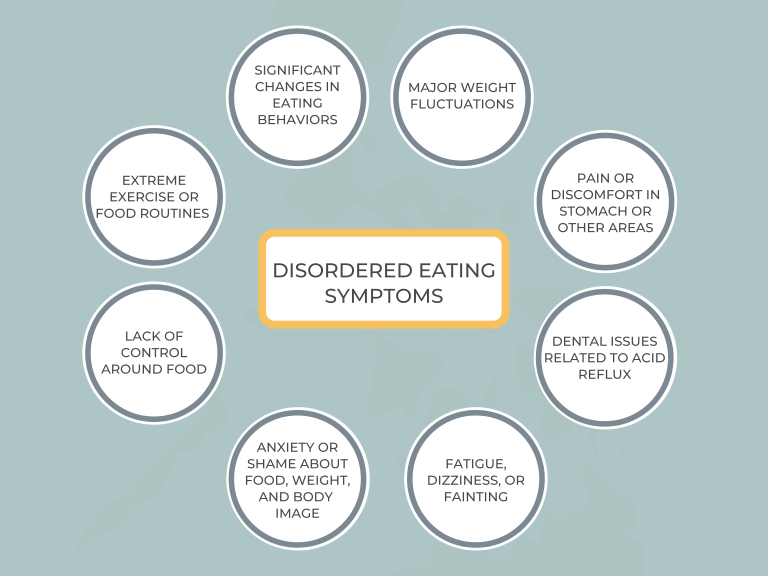
Some of the common symptoms of disordered eating include:
Although disordered eating behaviors may not be as severe as clinical eating disorders, they can still cause harmful consequences to your physical and psychological well-being.
People who experience disordered eating may be at risk of:
Perhaps one of the most critical risks of disordered eating is the possibility of it becoming a clinical eating disorder. Eating disorders are one of the most serious mental health illnesses in the United States, putting people in danger of severe cardiovascular, gastrointestinal, and neurological complications and threatening their life.
Yet, not everyone who experiences disordered eating develops an eating disorder. Either way, if you suspect you or your loved one are struggling with disordered eating behaviors, do not wait for things to get worse. Contact us today to see how we can help. The sooner we intervene, the sooner you can all start healing.
Even though disordered eating may bring significant emotional, mental, and physical distress, sometimes it’s not that easy to recognize. Regardless of how harmful the symptoms are, they may not align with all the typical signs of eating disorders and could go unnoticed.
To get a proper assessment, visit a doctor, registered dietitian, or licensed mental health professional. If possible, seek a practitioner who specializes in eating disorders or disordered eating for a thorough evaluation.
These health professionals will be able to review your history and current eating habits to provide a diagnosis. While there are no specific diagnostic criteria for disordered eating compared to eating disorders, there are certain behaviors and attitudes that specialists can identify to make recommendations on how to move forward.
Once a specialist has performed an assessment and identified disordered eating behaviors, the next step is to prepare a treatment plan.
Similar to treatment options for eating disorders, this action plan may involve a multidisciplinary approach, including education, nutrition, therapy, and medical attention. The goal is to implement a strategy tailored to your eating habits and needs so you can start recovering.
While in treatment, a team of specialists can support you to:
Having a family and friends support system can also help you navigate challenges and stay on track with treatment.
If your partner, children, family member, or friend are experiencing disordered eating, try to:
Above all, if you see something that raises concerns, don’t ignore it. Talk to your loved ones and support them in getting the help they need to navigate this challenge.
Engaging in disordered eating behaviors may happen gradually or out of the blue, without us realizing it. Whether you, your partner, teen or relative are showing signs of disordered eating, please know we are here for you.
Here at Madison Park Psychological Services, we provide psychological testing and therapy services to find the answers you seek. We will help you address these behaviors to start recovering.
Our staff of licensed psychotherapists has the knowledge and expertise to treat disordered eating and eating disorders alike. We draw from multiple therapy modalities, such as Psychodynamic Therapy, Cognitive-Behavioral Therapy (CBT), and others, to ensure we provide a customized plan adjusted to your needs. We are also happy to work with other health professionals and specialists to foster an integrated approach to your care.
Your journey starts with a consultation. We will get to know each other, answer your questions, and pair you up with a therapist that best suits you. Then we will perform an assessment to reach a diagnosis and prepare a treatment plan accordingly. This may involve weekly therapy sessions, among other strategies to support your wellness path.
You can choose between in-person or teletherapy appointments.
Changing your eating behaviors and improving your relationship with food is possible. Let’s work together so you can start healing.
Book a consultation or call us at 212-506-5935 if you have any questions about disordered eating. We are looking forward to hearing from you!
To contact us or book an appointment, please complete the form below.